
Our communities
We connect and empower our regional, rural and remote communities through safety awareness, partnerships and giving. By supporting education, charities and local organisations, we help build resilient, connected and future-ready communities across our network.
2024–25 HIGHLIGHTS
-
8.2%
decrease in public safety incidents
-
3,400
people benefited from in-person or online safety awareness presentations
-
$867,912
provided to community groups and charities
-
New
Essential Grants program, funding community initiatives focused on the environment, education, resilience and the energy transition
Public safety
Essential Energy is committed to the safety of community members and for everyone to live and work safely around the electricity network.
Public safety incidents (public general and public workers) decreased by 8.2%, a reduction of 78 incidents compared to 2023–24. While reported injuries rose by 33% (11 more than the previous year), there was a 20% decrease in fatalities, with four recorded (one fewer than the previous year), and life-threatening injuries dropped by 66%, with one recorded (two fewer than the previous year).
During the year, our public safety campaigns and activities focused on the risks across the top three at-risk segments:
- agricultural equipment and machinery contacting overhead powerlines
- motor vehicles contacting power poles and powerlines
- construction machinery contacting the underground electricity network.
Public safety incidents decreased by 8.2%, compared to the previous year. While reported injuries rose (11, 33% more than last year), there were fewer fatalities (four, 20% fewer than last year) and life-threatening injuries (one, 66% fewer than last year).
Injuries involving members of the public (excluding public sector workers) increased by 29%, an increase of eight incidents compared to 2023–24. Fatalities and life-threatening injuries resulting from motor vehicle accidents decreased by 50%, with 3 fewer incidents than the previous year. No injuries were recorded in agribusiness or aviation settings involving the general public.
Campaigns and education targeting the general public and agribusiness segments have focused on reducing fatalities and life-threatening events, and these risks have decreased as a result. A new treatment plan will maintain our agribusiness activities and increase targeted activities for the aviation segment in partnership with industry bodies.
The public use of drones around the network, and encroachments to our network in caravan parks, are two identified emerging risks. Actions to address these emerging risks were included in our June 2025 risk review to implement for future education activity
Public safety presentations
In-person safety awareness talks were provided to more than 3,200 people during the year. Participants represented a range of industry sectors, including construction, emergency services, transport, local government, engineering and telecommunications. These talks provided sector-specific risk and incident awareness and education, including tools and resources available to manage and mitigate workplace electricity safety risks.
Three free webinars were delivered during National Safe Work Month 2024. The webinars addressed the theme ‘Safety is everyone’s business’ for three at-risk segments: agribusiness, building and construction, and emergency services and first responders. The webinars provided the opportunity to share electrical safety information with new audiences. Approximately 200 participants were in attendance, representing organisations including councils, construction and agricultural companies, tertiary education institutions, and fire and rescue agencies.
Agricultural safety research
In collaboration with SafeWork NSW, Deakin University, and the National Centre for Farmer Health, research was undertaken of the risk perceptions of electrical hazards on Australian farms. The research, which included 253 online survey participants and 50 face to face interviews, found:
- approximately 30% of respondents (n=240) had experienced, or knew someone who had experienced, an electrical incident causing fatality or injury, with overhead powerlines the primary hazard
- farmers generally understand the risks posed by electricity; however, familiarity and frequency of exposure often lead to complacency
- respondents felt that electricity safety is under-represented in farm safety discussions compared to other hazards.
The findings reinforced our focus on prioritising electricity safety education and awareness in the agribusiness sector. We are continuing to work with industry associations and participate in industry events to share safety information with agricultural sector participants both in person and online.
General public safety
The theme ‘Stay. Call. Wait.’ shaped our general public campaign activities, helping people to remain safe if their vehicle comes into contact with the electricity network. The theme encourages people to stay in their vehicle, call triple zero for help, and wait for emergency services to arrive and give the all-clear before they exit. The campaign was delivered across news and social media, along with video content.
Additional awareness campaigns targeting community safety during storms and floods were also promoted across radio and digital advertising, combined with ‘always on’ commentary through social media networks. These messages were re-emphasised during the severe weather events that impacted many communities during the year.
Electricity Safety Week
Each year, Electricity Safety Week teaches students from Kindergarten to Year Six how to be safe around electricity and raises awareness of electrical hazards. The education program is run each September, providing schools with curriculumaligned teaching resources developed in collaboration with the NSW Department of Education.
In 2024, 876 schools (97% of primary schools from our network area) registered for the program. The program included new messages focused on safety around renewable energy sources and storage, such as solar power and community batteries. New classroom activities were introduced to support teacher and student engagement with these topics.
Supporting community organisations and charities
Essential Energy supports community groups and charities to empower the diverse regional communities we serve by fostering collaboration, enhancing local infrastructure and promoting sustainable practices.
Financial support is provided directly by Essential Energy and by enabling and encouraging employee giving. A total of $867,912 was provided to community groups and charities during 2024–25 – through Essential Grants; sponsorships, partnerships and donations; employee giving; and employee requests for funding.
Case study
Essential Grants

Essential Grants provide financial support to community groups across our network area.
The program launched during the year, providing 13 community organisations with $151,400 for projects focused on the environment, education, resilience and the energy transition.
Grant recipients included:
- Repurposing for Resilience Eurobodalla – the grant will be used to implement a solar-powered mobile dishwashing unit that will decrease single-use packaging at events on the NSW South Coast.
- Halfway Creek Community Hall – a vital facility for local events, markets, meetings, and community refuge during extreme weather. The grant will be used to install solar panels and a battery with blackout backup, to enhance resilience.
- Three Rivers Aboriginal Corporation (TRAC) – an Aboriginal-led organisation committed to cultural preservation, environmental stewardship and youth empowerment. Ngarru Yanha – Bee’s Journey, TRAC’s youth-led, sustainable beekeeping and land regeneration project. The grant will be used to install solar panels and battery storage to underpin a sustainable, off-grid hive monitoring system.
Other grant recipients were: Albury Women’s Shed, BackTrack Youth Works (Armidale), Bandon Grove School of Arts, Broken Hill Little Athletics, Carinya Court Complex (Boorowa), Deniliquin Local Aboriginal Land Council, LeaderLife (Dubbo), Police Citizens Youth Club (Parkes), Realising Every Dream (Lismore), Tintinhull Public School Parents and Citizens Association.
Essential Grants replaced the previous Community Choices and Community Halls programs, with a stronger focus on supporting community initiatives aligned with Essential Energy’s corporate and sustainability strategies.
Sponsorships, partnerships and donations
Essential Energy provided $336,533 to 45 community groups during 2024–25 through sponsorships, partnerships and donations. This funding supported initiatives that provide support such as care for people in vulnerable circumstances, promotion of social cohesion, cultural enrichment and sustainability, education opportunities, and community and environmental resilience.
Groups and initiatives that were supported included:
- Uniting Financial Counselling – to support customers in vulnerable circumstances by offering financial advice and tailored counselling programs
- Clontarf Foundation – to help improve the education, discipline, life skills, self-esteem and employment prospects for young First Nations men
- Stars Foundation – to support First Nations girls and young women to attend and remain engaged at school, complete Year 12 and move into work or further study
- Deadly Science – to support the delivery of STEM educational resources and programs to First Nations learners nationwide
- Pinnacle Foundation – to provide educational scholarships, mentoring and opportunities for young LGBTQIA+ Australians
- Boys to the Bush – to support experience-based events for primary school students, centred around core values of engagement, respect and community
- Australian Business and Community Network (ABCN) – our employees volunteer as program mentors, supporting economically disadvantaged students in our network area
- The Resilience Canopy – to support community groups in developing strategies for adapting to challenges such as natural disasters and social isolation, together with Kempsey Shire Council
- Landcare – to support several Landcare groups within our network area in promoting local biodiversity and community engagement.
Case study
The Resilience Canopy
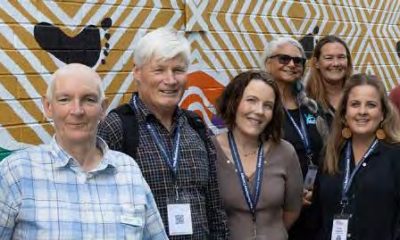
Essential Energy is partnering with The Resilience Canopy and Kempsey Shire Council to support local solutions that build the community’s long-term sustainability and resilience. We provided grant funding to community groups that are working to help communities be better equipped to overcome challenges and flourish in the future.
The first round of grants was awarded in March 2025, to:
- Stuarts Point and District Community Organisation (SPaDCO) – an established community group who will guide the community to develop actions to address disaster vulnerability and physical or social isolation
- Macleay Youth Rising – a collective of young people and community development practitioners who want to give Macleay youth a voice in their future
- Kempsey Business Community – which will work with business owners, customers and industry experts to secure a sustainable, vibrant retail sector together with the Macleay Valley Business Chamber.
Initial grants were $5,000 to each group, with an additional $20,000 per group to be provided as the initiatives progress. Each community group will engage with stakeholders to conduct research and gather information before designing events and workshops to generate ideas and community feedback on their initiatives.
The grants have taken on additional importance since the region was affected by the Mid North Coast Floods (see ‘Severe weather events’).
Employee giving
The Essential Giving Program (EGP), Essential Energy’s workplace donation initiative, supports eight charity partners: Garvan Institute, Variety – the Children’s Charity, Lifeline, Can Assist, Westpac Rescue Helicopter Service, ozED (Australian Ectodermal Dysplasia Support Group), the Children’s Tumour Foundation, and Royal Far West.
Our employees contributed $69,966 through pre-tax payroll deductions during 2024–25, which Essential Energy matched and supplemented up to $150,000, bringing total donations to $219,966 for the year.
Employee giving for the past five years is included in Appendices, table A8, page 137.
Employee Request for Funding
The Employee Request for Funding (ERF) program encourages employees to personally fundraise for registered not‑for‑profit and charity organisations, with Essential Energy dollar-matching employee fundraising up to $1,000.
During the year, employee-initiated fundraising totalled $80,185 and Essential Energy provided $11,946 in dollar-matching. Employees supported initiatives including the Cancer Council’s Seven Bridges Walk, CanAssist’s CANDo Challenge, Movember, Soldier On, and Cure Brain Cancer.
Employee requests for funding for the past five years is included in Appendices, table A8, page 137 in the Annual Report PDF.
Case study
The Children’s Tumour Foundation
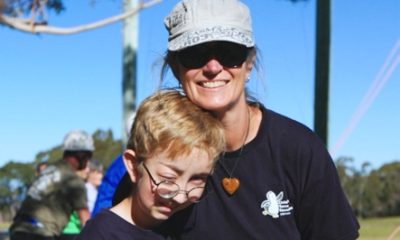
Our employees and the organisation support the Children’s Tumour Foundation (CTF) through the Essential Giving Program. CTF supports people and carers affected by neurofibromatosis, a rare and complex genetic condition that currently has no cure. The Foundation offers support, resources and assistance navigating medical care, and fosters a sense of community for those affected, across Australia.
Through employee giving and contributions from Essential Energy, more than $115,000 has been donated to CTF since the partnership began in 2017. Our employees also participate in fundraising initiatives, such as Run Fest in Port Macquarie, to raise awareness and funds to support CTF.