
Our customers
We proactively engage with our customers and collaborate across the energy sector so that our network meets evolving needs. By listening to our customers and the community, we deliver better service.
2024-25 Highlights
-
257,295
calls received to our Customer Contact Centre
-
95.4%
satisfaction rate from customers following interactions with Contact Centre team members
-
86,542
new smart meters installed across the network during the period
-
Refreshed
Customer Strategy focused on embedding customer voice, boosting community engagement and driving continuous improvement
The Energy Charter
The Energy Charter is a sector-wide initiative working to achieve better energy outcomes for customers and communities across Australia. Meaningful change is achieved through crossindustry knowledge sharing and collaboration on #BetterTogether initiatives.
As a Charter signatory, we are involved in the following initiatives:
- Ag + Energy Social Licence Roundtable
- Better Protections for Life Support Customers
- Community Energy Resilience
- Customer-led Tariffs
- First Nations Engagement
- Knock to Stay Connected
- Landholder and Community Social Engagement Training
- Smart Meter Customer Code.
In September 2024, Essential Energy co-led the Energy Charter #BetterTogether Life Support Customer Rule Change request to the Australian Energy Market Commission. The Rule Change request seeks to clearly define and enable the identification of critical life support customers and enable energy retailers and distributors to more effectively deliver timely assistance to customers for whom planned and unplanned power outages can be life threatening or cause lifelong, irreversible injuries.
We also co-led the award-winning Energy Charter ‘When it happens to you, know what to do’ campaign. We encouraged our life support customers and their carers to provide feedback on draft resources to help them understand and plan for power outages.
As a Charter signatory, Essential Energy is committed to embedding a customer-centric culture based on its five principles. Our 2024–25 Energy Charter Disclosure details our performance and was shared with our Customer Advocacy Group and Essential People’s Panel for review. It was published on our website for public comment in September 2025.
Customer strategy
We refreshed our Customer Strategy in October 2024. The strategy addresses four focus areas: customer-centricity growth, customer and community engagement, vulnerable customers and understanding the capabilities of AI in customer service.
We expanded our Voice of Customer survey program during the year to better understand our customers’ experience, with additional surveys introduced to collect feedback after different interactions. We also introduced the Voice of Team survey program, which gathers employee feedback on the service provided internally by key business units to identify factors shaping our culture.
We completed our deep dive commercial customer and partner research in late 2024. This research focused less on the experience related to a specific service event and more on relationships that enable the energy transition. Outcomes continue to inform initiatives across the business such as setting up a centralised support approach for connection applications and assessment enquiries.
We also launched our internal continual improvement program, Elevate, with employees from 14 teams working to understand and address customer challenges using Voice of Customer survey data. The program is building our customercentric culture by encouraging service improvements in each team and across the business, supported by regular meetings, learning events and cross-functional collaboration.
Customer service performance
Customer Service Incentive Scheme
The Customer Service Incentive Scheme (CSIS) is a financial measure proposed in our 2024–29 Regulatory Proposal and set by the Australian Energy Regulator to encourage customer service improvements across metrics that customers determined as the most important focus areas for our business. The measures include ease of phone interactions (surveys), time to resolve complaints, and the number of unplanned outages that have an estimated time to restore communicated to customers.
The CSIS commenced on 1 July 2024 and replaced the contact centre Service Target Performance Incentive Scheme (STPIS), which measured phone answer time performance.
CSIS performance results in either a financial reward for achieving each target or a penalty for underperformance. In the first year, performance was mixed across the three targets resulting in a small reward outcome. We continue to focus on improving across all three metrics and an initiative planned for 2025–26 is expected to significantly improve performance around the provision of estimated times to restore outages which will improve our customers’ experience during outages.
Customer research and insight
Our new Voice of Customer survey program saw steady improvements throughout the year. The new measure, which is defined as the percentage of customers saying they were either satisfied or extremely satisfied, moved from 55% in the first half of the year to 62.5% in the second half with an overall year end cumulative result of 59%.
Customer Contact Centre performance
Our Customer Contact Centre received 257,295 calls during 2024–25. On average, these calls were answered within 105 seconds. Our self-service automated interactive voice system was used by 57% of customers to obtain outage information. Post-call surveys indicate that 95.4% of customers are satisfied with their interaction with Customer Contact Centre team members.
Translation services
During 2024–25, we provided interpreting services to 14 customers in four different languages. No employees used their language skills in their daily roles or received the NSW Community Language Allowance Scheme allowance.
Complaints to the Energy and Water Ombudsman
The Energy and Water Ombudsman NSW received 314 complaints relating to Essential Energy during 2024–25. This is 3.2 complaints per 10,000 customers. It represents an increase on previous years due to significant network activity from storms and floods and planned outage dissatisfaction following industrial action. Previous years were 2.4 per 10,000 customers in 2023–24 and 2.8 per 10,000 customers in 2022–23.
National Energy Customer Framework
Essential Energy is committed to improving customer service and safety as defined by the National Energy Retail Law and Rules. In 2024–25, there was one quarterly reportable breach and no immediately reportable breaches reported to the Australian Energy Regulator (AER). The quarterly reportable breach occurred in August 2024 and related to the incorrect de-energisation of a customer’s premises. From 1 April 2025, the AER began requiring reports of material and immediately reportable breaches under the National Energy Customer Framework. Essential Energy reported no material breaches in the final quarter of 2024–25.
Case study
Excellence in customer service
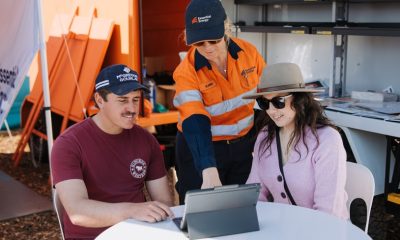
Essential Energy was recognised as an industry leader in customer service at the 2024 Australian Service Excellence Awards. Hosted by the Customer Service Institute of Australia, the awards showcase organisations and individuals who have delivered outstanding customer service performance and innovation.
Essential Energy was a finalist in the Government/Not For Profit category, which recognised our Voice of Customer and Elevate programs and extensive ongoing consultation with residential and small business customers through the energy transition.
Our Head of Customer, Mike Cole, said the award recognised the huge strides being made through customer service initiatives across the business: “The nature of our business means we have to find ways to deliver cost effective customer service excellence, balancing great service with legislative requirements and our focus on keeping downward pressure on our part of customers’ bills.”
Life support customers
Life support customers rely on a continuous supply of electricity to run medical equipment. Essential Energy has mobile phone numbers for many customers at registered life support premises, obtained through a registration process. Our automated SMS messaging service notifies customers within 30 seconds of Essential Energy confirming an unplanned outage affecting their premises. Additional messages provide estimated power restoration times, outage updates and notifications when power is restored.
During the year, we resolved an issue where some life support customers were receiving multiple automated SMS messages, so that we provide accurate and timely updates.
We also co-led an Energy Charter #BetterTogether initiative which aims to improve outcomes for the most vulnerable life support customers across Australia by being able to better identify those most at risk during outages.
We also worked with other energy businesses, the medical community, stakeholders and lived experience customers to co-design back-up planning templates for these customers and a national awareness campaign.
Smart meters
Smart meters increase customers’ visibility of their energy use at different times of the day, which allows them to optimise their use of appliances during lower-cost periods. Smart meters also benefit customers by enabling the installation of solar panels and batteries, and access to retailer offers and technologies that can help manage energy bills.
Smart meters provide Essential Energy with data to inform network performance optimisation and investment planning – both of which can help to reduce customer network charges. They also enable remote meter reading.
During the year, 86,542 smart meters were installed for customers connected to the Essential Energy network, bringing the total number to 500,542 across the network.
To accelerate the deployment of smart meters, the Australian Energy Market Commission (AEMC) has declared that all legacy meters (Type 5 and 6 meters) within NSW are to be replaced by smart meters by 2030. As a result, Essential Energy has developed a Legacy Meter Replacement Program, in consultation with stakeholders.
Customer engagement forums
Customer Advocacy Group
The Customer Advocacy Group (CAG) is a forum that shares external insights and feedback to inform our business decisions. CAG members represent residential and business customers including tenants, culturally and linguistically diverse customers, First Nations communities, customers experiencing disadvantage, rural and remote communities, small and large businesses, primary producers, industrial businesses, and local governments.
During 2024–25, the CAG:
- provided feedback on our initiatives to accommodate and encourage solar, storage and electrification
- discussed our approach to public safety and customer communications during major events
- monitored our implementation of the 2024–29 Regulatory Proposal commitments.
The CAG met four times during the year, with one meeting held at our Albury depot to hear directly about local initiatives, projects and challenges. Members visited Albury’s growth areas to hear from customers and our team about the opportunities and actions being taken to facilitate regional growth.
Essential People’s Panel
We engage directly with customers on topical issues through the Essential People’s Panel, a diverse group of 20 customers from across our network area.
The Panel met three times during the year to explore community and customer perspectives on local network batteries, flexible connection agreements and the emergency backstop mechanism, EV charging, the Essential Grants program, and communications with customers during major network outages.
Feedback from the Essential People’s Panel has informed business decisions, regulatory advocacy positions and improved how we communicate with our customers.
Partnering with local councils
There are 86 local councils within the Essential Energy network area. To maintain and strengthen relationships, we meet with a selection of councils every month to progressively meet the full list of councils. We hear directly from executive management teams and mayors about potential improvements and discuss how we can work together more effectively for our communities.
We met with 29 local councils during the year and extended a further 23 formal offers to meet. We also attended meetings of the NSW Country Mayors Association and the Central NSW Joint Organisation to provide information on our efforts to deliver safe, reliable energy for regional communities, and to outline specific parts of our innovation program of interest to local government.