
Pillar 2: Drive connections and load
Pillar 2 focuses on building a dynamic network that supports customer flexibility, enabling more connections and driving network resilience. This includes monitoring network performance, deploying assets that respond to changing network dynamics and finding ways to connect more customers to make greater use of the existing network.
2024-25 Highlights
-
40
network and community batteries integrated into the network
-
3
large-scale community batteries in Goulburn, Leeton and Maloneys Beach commissioned
-
10
large-scale renewable projects with signed agreements for connection in the Central West
Battery storage
Battery storage solutions are being trialled across the network to support the shift to renewable energy. Storage is critical for managing the grid as more decentralised renewable generation connects to the network, from large-scale storage systems to pole-mounted neighbourhood batteries.
We are trialling community battery models that allow customers to share the benefits of energy storage without needing to install their own battery. Our pole-mounted community battery trial with Origin Energy advanced significantly this year, with 34 of 35 batteries installed across five communities – Armidale, Bathurst, Dubbo, Port Macquarie and Wagga Wagga. These batteries allow residents to generate, store and use solar energy locally. As the trial enters its operational phase, we will assess how well the batteries balance grid limits, support National Energy Market (NEM) trading, frequency control, and perform under varying climate conditions.
In addition, three community batteries located in Goulburn, Leeton and Maloneys Beach were commissioned during the year and are now trading in the NEM. Each 192kW/530kWh battery stores excess rooftop solar and discharges it into the grid when demand is high. Funded by the Australian Government’s Community Batteries for Household Solar program, these batteries provide annual rebates to around 250 nearby customers, funded through trading profits.
Microgrids
Essential Energy’s strategic ambition for microgrids is to deploy them as targeted, cost-effective solutions that improve network reliability and resilience, particularly in fringe-of-grid and high-risk bushfire areas, while enabling greater integration of renewable energy.
The focus is on using microgrids where they present a lower-cost, higher-reliability alternative to traditional network augmentation, especially for remote or vulnerable communities.
This ambition progressed during 2024–25 through two key streams of work. The first involves actively exploring opportunities to plan and deploy renewable and storage-based microgrid projects that integrate solar, battery storage, and advanced control systems to enable greater local generation. The second is the investment in resilience-focused microgrids for six remote communities, supported by resilience funding within the 2024–29 regulatory period. Stage 1, which involves diesel-generator microgrids, has been implemented at two locations: Tibooburra and Ivanhoe. Stage 2 will incorporate battery storage and solar PV for those sites.
Together, these initiatives aim to strengthen energy supply in regional and remote communities and create a more resilient, flexible and sustainable electricity network.
Dynamic network management
As renewable energy generation continues to grow, it is becoming increasingly important to actively manage energy loads on the network, to balance supply and demand. Essential Energy is partnering with electricity retailers to trial dynamic load control technologies that shift household energy use to align with periods of peak solar generation.
One such trial, launched in late 2024 in partnership with Origin Energy, involves remotely controlling participating customers’ hot water systems using their smart meters, following an agreed schedule. This allows hot water heating to occur during the middle of the day when solar output is high, helping to reduce evening peak demand and improve network stability, while maintaining safe operational limits.
The trial is currently open to all retailers and is planned for expansion in 2025–26, supporting the transition to a smarter, more flexible and decarbonised energy system. Retailers benefit from better alignment of customer demand with low wholesale electricity prices during solar peaks, while customers may see cost savings and emissions reductions.
Backstop Control Capabilities
The Backstop Control Capabilities initiative, which commenced during 2024–25, is establishing the technical infrastructure required to enable backstop control of Consumer Energy Resources (CER), such as rooftop solar and batteries, required to maintain power system security. Backstop control allows distribution networks to manage the amount of energy being exported into the grid by customers’ CER, to maintain grid stability when export from CER is high and grid demand is low. Essential Energy would only use backstop control when directed to do so by the Australian Energy Market Operator (AEMO).
When completed in 2026, backstop control will also deliver a secure, scalable foundation for managing CER exports in real time, supporting both customer energy participation and system reliability.
Case study
Utility-scale connections in the Central West
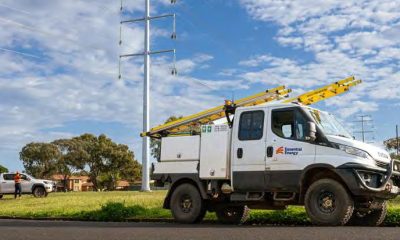
An initiative proposed by Essential Energy can enable the connection of approximately 2.3GW of new renewable generation to Essential Energy’s sub-transmission network by 2030, supporting the renewable energy transition within the Central-West Orana Renewable Energy Zone (CWO REZ). By augmenting Essential Energy’s existing sub‑transmission network, this would leverage existing local infrastructure to quickly connect new generation, alleviating the pressure to build large transmission network infrastructure.
Implementation is currently underway with the first two solar generation and storage facilities proposed for connection, Forest Glen and Maryvale, now in delivery, with energisation planned to occur during 2026. Initial analysis of the Essential Energy sub‑transmission network identified the potential to host 15GW of new renewable generation across 37 bulk supply points (BSPs – connections between the distribution and transmission networks). This proposal is the first of these to be pursued, with five more prioritised for further investigation, at Wagga Wagga, Yass, Tamworth, Marulan and Albury. Combined, the six projects have the potential to unlock approximately 8.5GW of network hosting capacity through targeted network upgrades.
At 30 June 2025, Essential Energy had approximately 6GW of connection enquiries from renewable energy proponents looking to connect to various locations in Essential Energy’s distribution network.