
Circular economy and waste management
Embedding circular economy principles and enhancing waste reporting practices across the organisation progressed over the past year, reflecting our commitment to protect the environment. For many years, we have been working to increase reuse, repair, refurbishment and recycling of materials from our network and operations. We are continuing to develop and implement plans to reduce waste, lower reliance on raw materials, and contribute positively to climate goals and reducing greenhouse gas emissions from waste.
A sustainability-focused Board Strategy Day, held in March 2025, included discussions on circular economy and the opportunities that exist for Essential Energy and the energy sector. The session included a deep dive into circular economy practices, review of national and State policy frameworks and discussion of Essential Energy’s ambition and role – helping to align leadership for this important aspect of sustainability.
Circularity project
A circularity assessment was completed during the year, focused on depots in south‑eastern NSW (Bega, Moruya and Jindabyne). The project increased understanding of the current state of circularity and waste management across operations. It also identified and prioritised improvement opportunities that are relevant for both the pilot depots and for rolling out across the whole network.
Waste reporting improvements
To strengthen our waste reporting processes, a detailed waste data review was conducted. The project involved cross-functional input on current waste and circular economy processes, an evaluation of sustainability reporting frameworks, and compilation of all waste data from 2021–22 to 2024–25. This initiative supported our transition toward more robust and transparent waste reporting, which aligns with evolving regulatory expectations and internal sustainability goals.
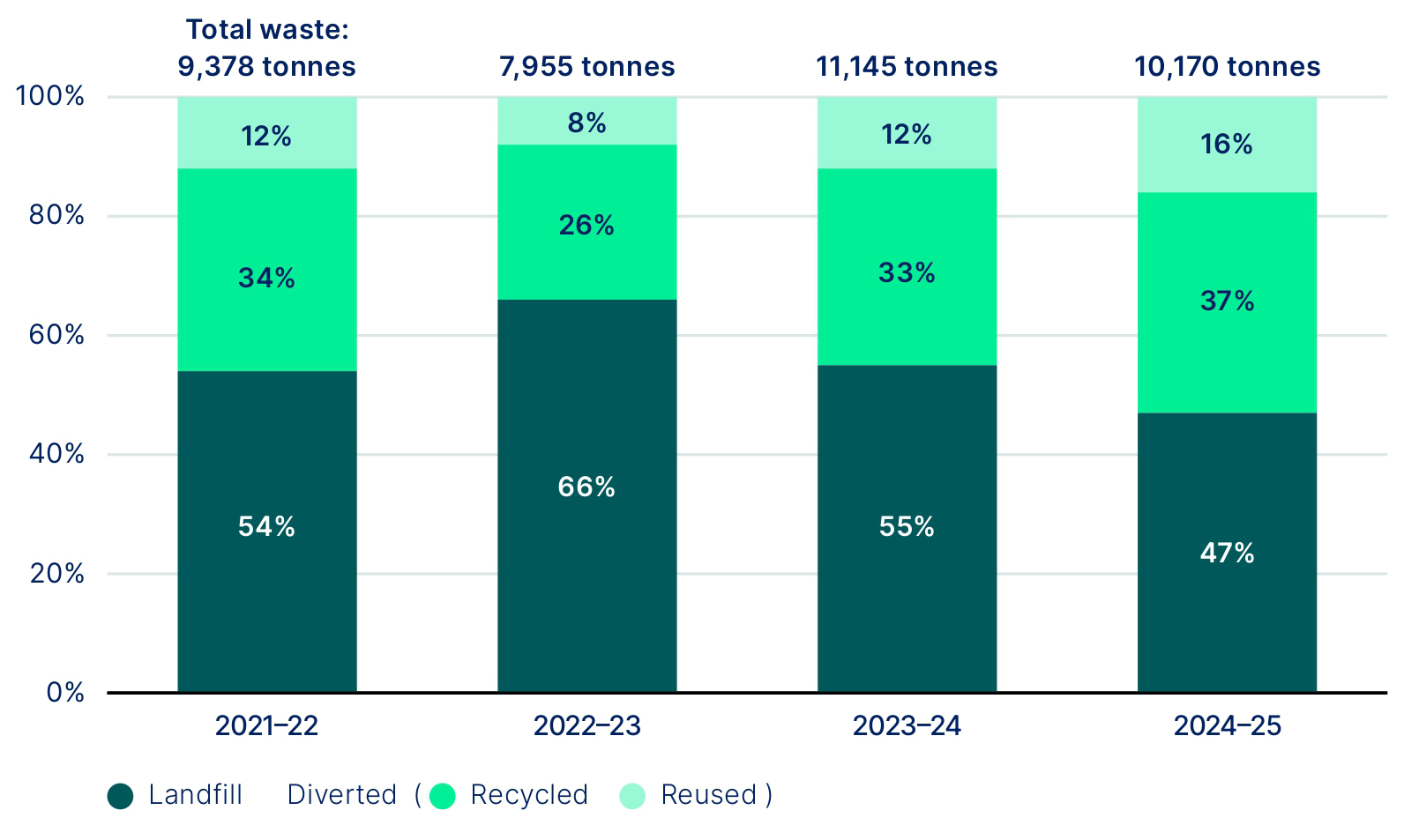
Across the year 10,170 tonnes of waste were generated. Of this, 53% was diverted from landfill, with 3,806t recycled and 1,590t reused – including scrap metal, poles, network assets and digital devices. Figure 3 shows diversion rates for the past four years and table A20 in the Appendices (see Annual Report 2024-25 PDF, page 147) has more details.
FIGURE 3. Percentage waste to landfill and diverted (recycled and reused)
Partnership with Bega Circular Valley
Essential Energy is a foundation member of the Regional Circularity Cooperative, which has launched a collaborative circular program known as Bega Circular Valley. This 10-year program aims to identify, accelerate and implement enabling projects to enhance the delivery of circularity and stimulate a regional circular marketplace and a vibrant economy. We are working with the Cooperative to identify projects in the region to accelerate clean energy and collaboration to drive sustainable outcomes.